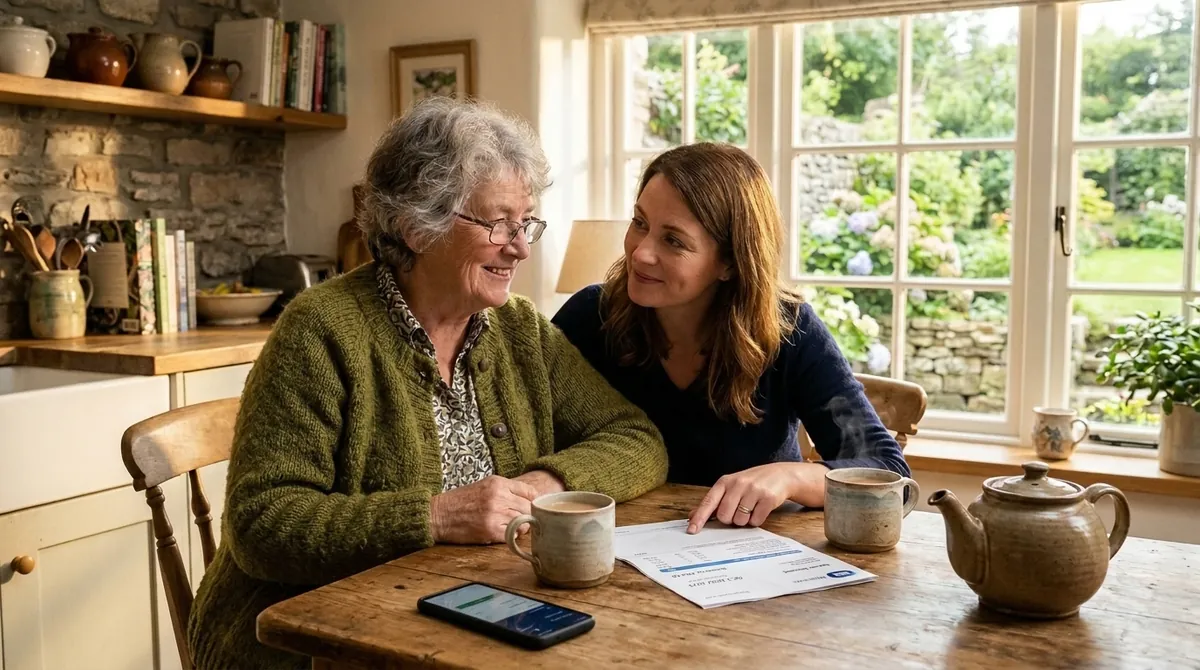
Updated
The short version
Heating and lighting a home is one of the biggest bills for many older households, especially on a fixed income. Research in the UK suggests that older homeowners are the least likely to switch, and plenty stay on the same plan for years after its discount has ended, paying more than they need to for exactly the same energy.
The usual reasons are worries: that the power might go off, that an engineer will need to call, or that the Household Benefits Package will be lost. None of these happen. Switching supplier changes who sends the bill and what you pay per unit. The wires, the pipes, the meter and your right to State supports stay exactly as they are.
12 months
How long most sign-up discounts last. Some plans run for 24.
€727 a year
The gap between the highest standard and lowest discounted electricity tariff in March 2026, says the CRU.
€1.15 a day
The Household Benefits Package energy allowance, about €35 a month. Switching does not end it.
Why does being out of contract cost more?
Because the discount on most plans only lasts for a fixed term. When it ends, you usually move onto your supplier’s standard rates, and every unit of electricity or gas costs more.
Keeping a home warm and bright in Ireland is not cheap. Anyone who spends more of the day at home, and needs steady heat from autumn through to spring, feels high electricity and gas prices more than most.
Most new plans come with a discount for a fixed term, usually 12 months and sometimes 24. When that term ends, you usually move onto your supplier’s standard rates unless you choose a new plan. The discount was a percentage off those standard rates, so once it ends, every unit costs more. The good news: your supplier must show the contract end date clearly on your bills, and write to you 30 to 60 days before it.
The gap can be large. In June 2026 the Commission for Regulation of Utilities (CRU), the energy regulator, reported that in March the difference between the highest standard tariff and the lowest discounted tariff was €727 a year for electricity and €434 for gas. It also found that a customer who switched supplier every year for four years, up to the end of 2024, would have saved €1,696 on electricity and €741 on gas.
Illustrative example
What happens when a 12-month plan ends
A home using 4,200 kWh of electricity and 11,000 kWh of gas a year
Year 1: on a discounted plan
about €2,380
Year 2 onwards: on standard rates
about €2,800
Some households compare plans every year out of habit. Others stay on the same plan for years, paying more each winter for exactly the same heat and light. Putting that right takes one bill and a little time.
Is switching safe for an older household?
Yes. Switching changes who sends the bill and the price per unit, nothing else. The power stays on, nobody needs to call to the house, your State allowances stay yours and the new supplier does the paperwork.
When we speak to older homeowners and their adult children across Ireland, the same four worries come up almost every time. Here is what actually happens when you switch.
Will my power or heating go off when I switch?
No, not for a moment. ESB Networks runs the electricity network and Gas Networks Ireland runs the gas network, whichever supplier you choose. Switching changes who sends the bill and the price you pay per unit, not the supply itself.
Same wires, same pipes, no break in supply
Will I lose my Household Benefits Package or Fuel Allowance?
No. Both come from the Department of Social Protection, not from your supplier, so switching does not end them. If your allowance is paid into a bank account or post office, nothing changes at all. If it shows as a credit on your bill, there is one small step, covered below.
Your State allowances stay yours
Will someone have to call to the house?
Nobody needs to visit. No one has to come in, touch the fuse board or change the meter. Your new supplier will ask for a meter reading, and if you have a smart meter, readings are usually sent automatically.
Done from the kitchen table
Do I have to phone my old supplier to cancel?
No cancellation call needed. Your new supplier arranges the switch through the networks’ own systems, and your old supplier then sends a final bill. One tip: settle any large balance with the old supplier first, as money owed can hold a switch up.
The new supplier does the paperwork
How switching works in Ireland
One network. Only the bill changes.
The wires, pipes and meter belong to the national networks, not to the company that sends your bill.
The networks
ESB Networks and Gas Networks Ireland
Same cables, pipes and repair crews
Your new plan is applied to your meter number (MPRN or GPRN)
Your home
Same meter, same heating
Your new rates on your next bill
Stays the same
What never changes
- Your wires, pipes and meter: looked after by ESB Networks and Gas Networks Ireland.
- Power cuts and repairs: handled by the same network crews, whoever your supplier is.
- State allowances: the Household Benefits Package and Fuel Allowance stay yours.
- Extra care: every supplier must follow the regulator’s rules for customers who need it.
The only difference
What actually changes
- The unit rate: the price per kWh, moving from standard rates to your new plan’s rate.
- The standing charge: the daily charge, which varies from plan to plan.
- The name on the bill: your new supplier sends it, by post or email as you choose.
Switching every year for four years, to the end of 2024, would have saved €1,696 on electricity, says the CRU.
Will I lose my Household Benefits Package if I switch?
No. The Household Benefits Package and Fuel Allowance come from the Department of Social Protection, not from your supplier, so switching does not end either one. If the allowance shows as a credit on your bill, there is one small step.
The Household Benefits Package includes an electricity or gas allowance of €1.15 a day, about €35 a month, from the Department of Social Protection. It is not means tested for anyone aged 70 or over, and people aged 66 to 69 can qualify too. Check how yours is paid:
Paid into a bank account or post office
You can switch whenever suits you. The allowance keeps arriving on the first Tuesday of each month, with no paperwork at all.
Paid as a credit on your bill
Some longer-standing customers still get the allowance as a bill credit. The credit stops when you change supplier, but the allowance does not. Tell the Department of Social Protection when you switch, and it will be paid to your bank account or post office instead.
Fuel Allowance, for those who qualify, is €38 a week through the heating season, rising to €43 from January 2027. It comes with your social welfare payment, so changing energy supplier does not touch it.
How do I register for extra care with my supplier?
Ask your supplier to add you to its register, which is free. Every electricity and gas supplier must keep one for customers who need extra care, and there are two kinds.
It is the CRU’s rule, so it applies whichever supplier you choose, and registering must be easy. Before switching for yourself or an older relative, take a couple of minutes to check which register applies:
Priority services
For medical equipment
For anyone in the home who depends on electrically powered equipment, such as a home oxygen concentrator, home dialysis, a stairlift or a pressure-relieving mattress.
- Not disconnected for an unpaid bill
- Your details go to ESB Networks, for advance notice of planned power cuts and a priority line during outages
Special services
For age 66 and over, or extra needs
For customers aged 66 or over who live alone, or only with other older people or children, and for anyone with sight, hearing, mobility, speech, learning or mental health needs.
- No disconnection between 1 November and 31 March
- Extra care in how your supplier contacts you
A tip for switching day: tell your new supplier if anyone at home needs extra care. Each supplier keeps its own register, so this makes sure the new one has you on it from the start.
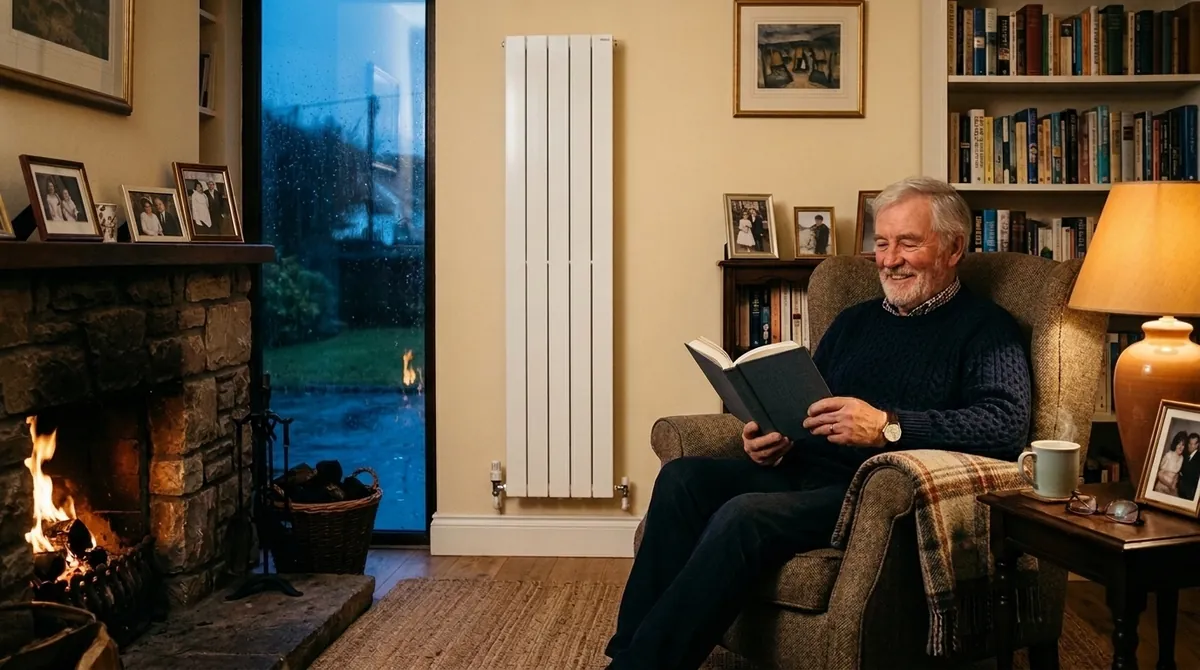
How can I help a parent switch without taking over?
With your parent’s say-so, you can help with an electricity or gas account without any legal paperwork. Be added as a contact on the account, keep the bills the way they like them, and know where to look on a bill.
Many adult children want to help a parent stop overpaying while respecting their independence. Three practical ways to help:
Ask to be added as a contact on the account
Under data protection rules, a supplier can only discuss an account with the person it belongs to, unless they agree otherwise. A short phone call together is usually all it takes for your parent to add you as a nominated contact. The account stays in their name, and you can check rates, help with meter readings or get a copy of a bill. ESB Networks will also send planned outage updates to a trusted family member.
Keep paper bills if your parent relies on them
If your parent likes opening an envelope at the kitchen table and filing each bill in a folder, keep it that way. Choose a plan that offers paper bills, rather than one where bills land in an inbox nobody checks.
Spot the four numbers that matter on any bill
Bills are full of graphs and small print, but four details on a recent one tell you whether a household is on standard rates.
Reading a bill
Where to look on an electricity or gas bill
Sample bill
Electricity and gas · figures for illustration
1Meter number
MPRN: 10 012 345 678 · GPRN: 1234567
Your meter’s ID, at the top of the front page. The new supplier needs it.
2Plan and end date
Plan: Standard 24 hour
Contract: ended
Your bill must show when a fixed-term contract ends. If that date has passed, or the plan says standard, you are free to switch with no exit fee.
3Unit rate and standing charge
Unit rate: 36.4c per kWh
Standing charge: €0.78 a day
Look past the headline discount to the price per kWh and the daily standing charge. Together they make up most of the bill.
4Urban or rural
Area: urban (DG1) or rural (DG2)
Meter: 24 hour
Rural homes pay a higher standing charge than urban ones, so compare plans using the right one.
What should I check before switching?
Five things: whether the plan’s fixed term has ended, how the household likes its bills, whether anyone needs extra care, how the Household Benefits Package is paid, and the meter reading on the day.
Whether you are looking at your own bills or sitting down with a parent over a cup of tea, these five checks make sure the switch is safe, simple and worth it.
1. Renewal date
Has the plan’s fixed term ended, or does the bill say standard rates?
Why it matters: If so, the discount has ended and there is no exit fee to leave.
2. How bills arrive
Does the household want a paper bill in the post, or an email?
Why it matters: Rules out online-only plans for a home that relies on paper bills.
3. Extra care
Is anyone at home aged 66 or over and living alone, or using medical equipment?
Why it matters: Tell the new supplier, so its register includes you from the first day.
4. Household Benefits Package
Is the allowance paid to a bank or post office, or as a credit on the bill?
Why it matters: Bank or post office: nothing to do. Bill credit: tell the Department of Social Protection when you switch.
5. Meter reading
Take a photo of the meter on the day you switch.
Why it matters: The old supplier’s final bill and the new supplier’s first bill start from the same, accurate number.
| Step | What to check | Why it matters |
|---|---|---|
| 1. Renewal date | Has the plan’s fixed term ended, or does the bill say standard rates? | If so, the discount has ended and there is no exit fee to leave. |
| 2. How bills arrive | Does the household want a paper bill in the post, or an email? | Rules out online-only plans for a home that relies on paper bills. |
| 3. Extra care | Is anyone at home aged 66 or over and living alone, or using medical equipment? | Tell the new supplier, so its register includes you from the first day. |
| 4. Household Benefits Package | Is the allowance paid to a bank or post office, or as a credit on the bill? | Bank or post office: nothing to do. Bill credit: tell the Department of Social Protection when you switch. |
| 5. Meter reading | Take a photo of the meter on the day you switch. | The old supplier’s final bill and the new supplier’s first bill start from the same, accurate number. |
How can AutoSwitch help with my bill, or a parent’s?
Add the bill and AutoSwitch reads it, shows in plain euro whether a cheaper plan exists for that usage, and keeps track of the renewal date.
Reading an energy bill is rarely straightforward. Day and night rates, standing charges, urban and rural codes and percentage discounts all play a part, and working out whether a household is paying too much takes time and patience.
We built AutoSwitch so that nobody in your family stays on standard rates without knowing it:
Start with your bill
Take a photo of a paper bill, upload a PDF, or forward the bill email to [email protected]. We read the rates, the meter and the usage in seconds.
See it in plain euro
We show you, in euro and cent, whether a cheaper plan exists for that exact usage. Then check its billing and payment terms suit the household.
Stay ahead of renewals
AutoSwitch keeps track of the renewal date and looks for a cheaper plan before it comes round. Switching for you at renewal is coming soon.
Useful contacts
Numbers to keep by the phone
ESB Networks, power cuts and faults
Free, 24 hours a day, for any power cut or fault on the electricity network.
Gas Networks Ireland, gas emergencies
24 hours a day, if you smell gas or lose your gas supply.
Household Benefits Package, Department of Social Protection
Questions about the electricity or gas allowance, or telling them you have switched.
Source for the savings figures: the CRU, Over 60,000 customers switched energy supplier in March, 5 June 2026.
Impartial and free to use
Start with your bill
Add a photo or PDF of your electricity or gas bill, or a parent’s, to a free AutoSwitch dashboard. We read the rates in seconds, keep track of the renewal date and show you the cheapest plan for that usage.
Get startedor forward it to [email protected]
